Medicare basics, in plain English
Four "parts," two main paths, and a lot of confusing words. Here's the whole picture without the jargon.
The four parts of Medicare
Part A — Hospital insurance
Covers inpatient hospital stays, skilled nursing, hospice, and some home health care. Most people pay $0 in premiums because they paid in through payroll taxes. In 2026 the hospital deductible is $1,736 per benefit period.
Part B — Medical insurance
Covers doctor visits, outpatient care, lab work, and preventive services. In 2026 the standard premium is $202.90/month with a $283 annual deductible; after that you typically pay 20% of the cost.
Part C — Medicare Advantage
A private, all-in-one alternative to Original Medicare. Plans use networks, usually fold in drug coverage, and often add extras like dental and vision. They include a yearly out-of-pocket maximum.
Part D — Prescription drugs
Covers medications, either as a standalone plan (with Original Medicare) or built into an Advantage plan. There's now an annual cap on what you pay out of pocket for covered drugs — $2,100 in 2026, rising to $2,400 in 2027. Plans can also charge a deductible of up to $615 in 2026 ($700 in 2027) before coverage begins; many charge less.
Two main ways to get covered
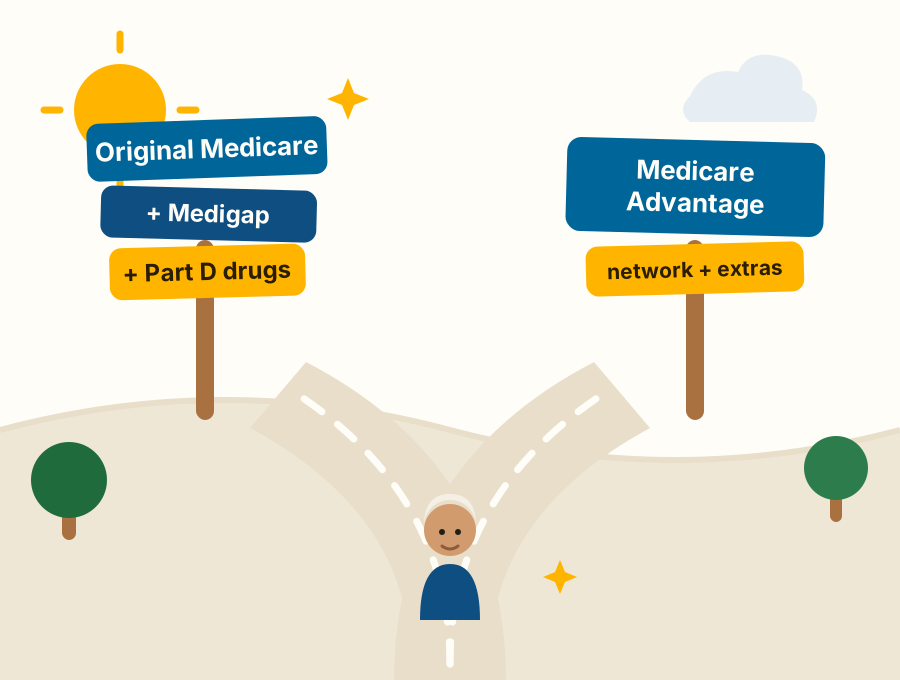
Almost everyone ends up on one of these two paths:
Original Medicare + a Supplement + Part D
Parts A & B, plus a Medigap policy to cover the gaps, plus a drug plan. Go to any doctor that takes Medicare; very predictable costs.
Medicare Advantage (Part C)
A private plan that bundles A, B, and usually D — often with extras — using a network and an out-of-pocket maximum.
The confusing words, defined
Type to filter the list.
No terms matched your search. Try another word, or call us at (800) 845-8765.
Premium
The monthly amount you pay to have a plan, whether or not you use care.
Deductible
What you pay out of pocket before your coverage starts paying its share.
Coinsurance
Your share of a cost as a percentage — for example, 20% of a doctor's bill under Part B.
Copay (copayment)
A fixed dollar amount you pay for a service, like $20 for an office visit.
Out-of-pocket maximum
A yearly cap on what you'll pay for covered care. Medicare Advantage plans have one; Original Medicare on its own does not.
Original Medicare
Part A and Part B, administered by the federal government. You can add a Supplement and a drug plan.
Part A
Hospital insurance — inpatient stays, skilled nursing, hospice, some home health.
Part B
Medical insurance — doctor visits, outpatient care, labs, and preventive services.
Part C (Medicare Advantage)
A private plan that replaces Original Medicare and bundles your coverage, usually including drugs.
Part D
Prescription drug coverage, sold as a standalone plan or built into an Advantage plan.
Medigap (Medicare Supplement)
A private policy that pays much of what Original Medicare leaves you to pay, like deductibles and coinsurance.
Formulary
The list of prescription drugs a Part D or Advantage plan covers, and the tier (cost level) for each.
Network
The doctors, hospitals, and pharmacies a plan contracts with. In-network care costs less.
HMO
A network plan that usually requires you to use in-network providers and may need referrals to see specialists.
PPO
A network plan that also covers out-of-network care, usually at a higher cost, without referrals.
IRMAA
Income-Related Monthly Adjustment Amount — an extra charge added to Part B and Part D premiums for higher-income beneficiaries.
IEP (Initial Enrollment Period)
The 7-month window to first sign up for Medicare, around your 65th birthday.
GEP (General Enrollment Period)
January 1 – March 31, for people who missed their initial window.
SEP (Special Enrollment Period)
A window to enroll outside the usual times after a qualifying event — like losing employer coverage.
AEP (Annual Enrollment Period)
October 15 – December 7 each year, when you can change your Medicare Advantage or Part D plan for the following year.
Guaranteed issue
Your right to buy certain plans without being turned down or charged more because of your health.
Creditable coverage
Coverage considered at least as good as Medicare's — having it lets you delay enrolling without a penalty.
Coverage gap ("donut hole")
A former phase in Part D drug spending. It was replaced in 2025 by an annual cap on out-of-pocket drug costs — $2,100 in 2026 and $2,400 in 2027.
MAGI
Modified Adjusted Gross Income — roughly your AGI plus tax-exempt interest. It's what Medicare uses to decide IRMAA.
Dual-eligible
Someone who qualifies for both Medicare and Medicaid, often with special plan options.
Extra Help (LIS)
A federal program that lowers Part D drug costs for people with limited income and resources.
SHIP
State Health Insurance Assistance Program — free, unbiased Medicare counseling in every state.
Assignment
When a provider agrees to accept the Medicare-approved amount as full payment, so you aren't billed extra.